
Stop pivoting the strategy. Diagnose before you cure.
When a business misses its targets, the instinct is to change the strategy. But most of the time the strategy is fine. What's broken is the delivery mechanism — and treating an operational bottleneck with a strategic pivot is one of the most expensive mistakes in scaling.
I've been brought into businesses at every stage of growth — from £3 million to organisations heading toward £50 million. One of the most consistent and expensive mistakes I see is misdiagnosis. Leaders confuse friction with failure. They confuse a slow engine with a wrong map. And so they keep changing the map — when what they actually needed was a mechanic.
Before any strategic change, run these three diagnostics. They take less than an hour.
They could save you six months.
Diagnostic 1
The intent vs. flow test
Strategy problem
Failure of intent. Wrong customers, wrong pricing, wrong market. The destination is wrong.
Operational bottleneck
Failure of flow. The market wants the product, the team knows the goal — but hand-offs are stuck. The road is broken, not the destination.
The rule: friction is almost always an operational symptom first. Confirm the market is saying no — not just that the machine is struggling to deliver.
Diagnostic 2
The wait-time audit
The wait-time audit
Map your idea-to-value lifecycle end to end. Mark every point where work stops moving — every handover requiring chasing, every approval adding days without adding value. Example: a company whose strategy is to be the fastest innovator in their sector, but it takes six weeks for Legal to approve a client trial. That isn't a strategy problem. That's a bottleneck. Don't rewrite the strategy. Fix the approval workflow.
The rule: don't change the destination. Fix the road.
Diagnostic 3
The resource starvation signal
Strategy problem signal
Resources available but poured into a leaky bucket — high churn, low-margin sales, customers who never renew.
Bottleneck signal
The bucket is right but the tap is restricted — best people spending 40% of time on admin and broken processes.
The rule: different problems, different solutions — and completely different consequences if you confuse them.
"High-growth companies die not because the strategy was wrong — but because they confused friction with failure and kept pivoting when what they needed was to fix the plumbing."
This is where the PATH 2 SCALE framework begins — with the P, Purpose and Vision Alignment. Before optimising anything, you must know what is actually broken. A misaligned purpose is a strategy problem. A misaligned process is an operational one. Conflating them is lethal.
Before your next strategy day, before you redraw the roadmap — run these three tests. The answer will almost certainly surprise you.
Most businesses don't fail to scale. They leak value faster than they can create it. Misdiagnosis is one of the most expensive leaks of all — because it sends the entire organisation chasing a problem that doesn't exist.
Want to Know Where Your Business Is Leaking Right Now?
I’ve built a free assessment that takes less than five minutes and tells you exactly which PATH domain your leaks are coming from — P, A, T, or H — so you can stop treating symptoms and start fixing the source.
No fluff. No sales pitch. Just clarity on where to look first.
#BusinessStrategy #StrategicPivot #Leadership #ScaleUp #FounderMindset #DecisionMaking #GrowthStrategy #Entrepreneurship #BusinessGrowth #TheUnicornMentor
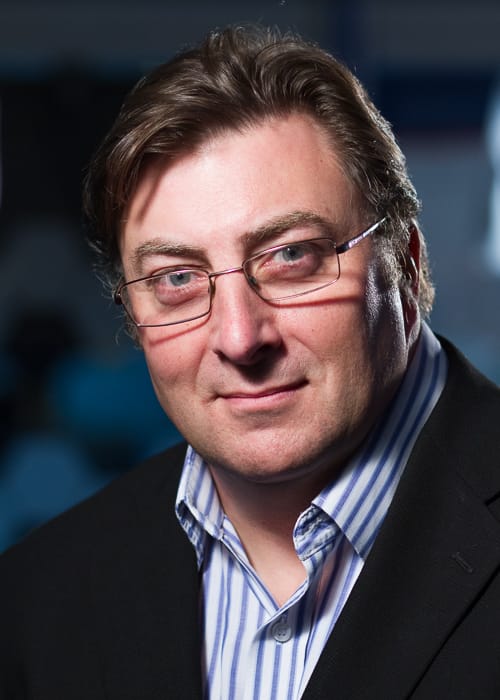
Stuart Webb works with founders and leadership teams scaling businesses from £3M toward £50M — helping them identify and seal the leaks in strategy, execution, team, and growth that prevent sustainable scale.
Stuart speaks from direct operational experience, not theory. Every session is grounded in real scaling challenges, real structural fixes, and the specific leaks that cost founders most between £3M and £50M.
After a research science career, Stuart founded and exited three companies, held senior corporate roles, and serves as a Non-Executive Director across multiple sectors.
He holds a doctorate from the University of Oxford and is the creator of the PATH 2 SCALE framework — a proprietary methodology for operational scaling used by founders across the UK.
JOIN MY MAILING LIST